
Polished Concrete vs Epoxy Coating for a Shop or Warehouse Floor
July 21, 2026
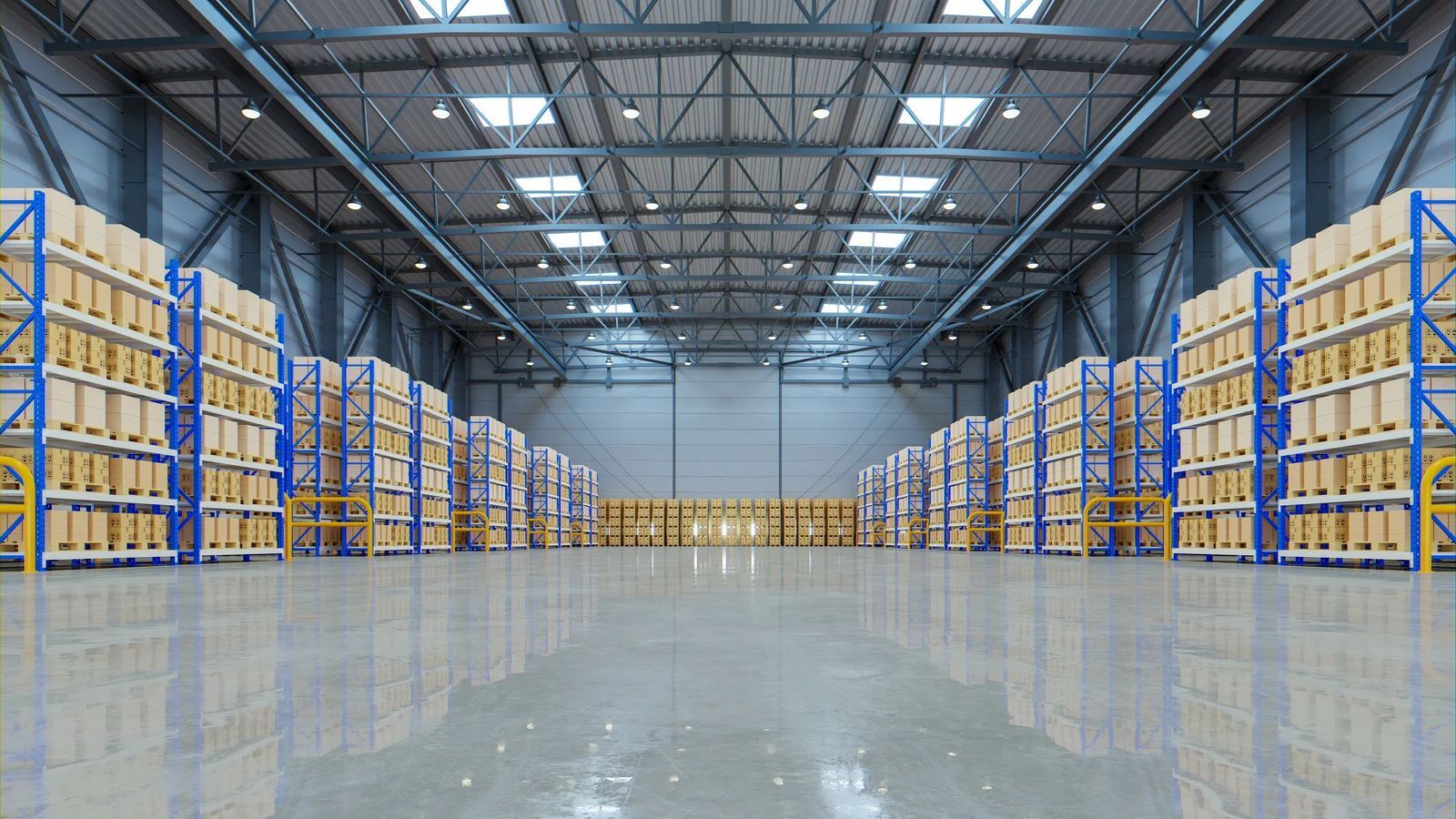
Quick Answer: Polished concrete and epoxy solve the same problem, a hard-wearing floor for a shop or warehouse, in two different ways. Polished concrete is the existing slab itself, mechanically ground and densified until it's hard, dust-resistant, and reflective, with no coating layer to wear through. Epoxy is a resin coating applied on top of the slab, which gives it strong chemical and impact resistance but also means it can chip, wear thin at traffic lanes, or need a re-coat over time. Polished concrete tends to hold up longer with less recurring maintenance; epoxy tends to win where chemical exposure, safety striping, or a specific color scheme matter more than long-term upkeep.
You've got a shop or warehouse floor that's either aging out or getting built new, and you're standing between two options that both get pitched as "the durable one." One contractor tells you epoxy is the answer. Another tells you to skip the coating altogether and polish what's already there. Both are right, depending on what the floor actually has to survive: forklift traffic, chemical spills, dust-sensitive work, sometimes all three at once.
The difference isn't cosmetic. One changes the surface of your slab. The other adds a layer on top of it. That single distinction drives almost everything else: how long the floor lasts, how it gets maintained, and how much downtime you're looking at before it's back in service.
How the Two Systems Are Actually Built
Polished concrete is your existing slab, reworked
There's no coating involved. A polishing crew works through progressively finer diamond grits, starting with a rough cut to expose and level the surface, then honing, then polishing, until the slab itself is smooth and reflective. Partway through that sequence, typically around the 200-grit stage, a lithium silicate densifier gets applied. It reacts with calcium hydroxide naturally present in the concrete and converts it into more calcium-silicate-hydrate gel, the same hard binding compound that makes concrete strong in the first place. That reaction tightens and hardens the surface for good. It can't be undone, and it can't wear off, because it's not sitting on the slab. It's part of it now.
Epoxy is a coating system applied over the slab
Surface prep comes first (grinding or shot-blasting to open the pores of the concrete so the material can bond), then a resin and hardener get mixed and applied, forming a continuous, high-strength plastic layer on top of the existing floor. That layer is what gives epoxy its color options, its safety-striping capability, and its resistance to spills sitting on the surface rather than soaking in.
A polished floor has nothing to delaminate, chip, or peel, because the finish is the concrete. An epoxy floor performs beautifully as long as that bonded layer stays intact. But it's still a film sitting on top of a slab, and films can fail at the bond line if moisture gets underneath or the substrate wasn't dry and stable to begin with.
Durability Under Real Warehouse Traffic
Forklifts wear differently on each system. Polished concrete resists abrasion well because you're wearing on solid, densified concrete rather than a surface coating, so there's no film to grind through at forklift turn radii or dock-door traffic lanes. Epoxy holds up to rolling loads too, but because it's a topical layer, high-traffic zones are where a coating shows wear first, usually as thinning, scuffing, or hairline cracking right at the busiest turns.
Chemical and impact resistance is where epoxy tends to pull ahead. A properly formulated epoxy system creates a continuous, non-porous barrier that resists oil, solvents, and other chemicals sitting directly on the surface, which matters in a shop dealing with regular spills. Polished concrete is denser and more stain-resistant than an untreated slab, but it's still concrete underneath. Porous at a microscopic level. Acidic spills left standing can etch or stain it if the floor isn't also sealed against that kind of exposure.
Longevity tilts the other way. A well-installed, well-maintained
polished floor commonly performs well past 15 to 20 years, since re-densifying and re-burnishing renew the shine without touching the underlying finish.
Epoxy coatings typically hold up for 5 to 15 years before a re-coat is worth considering, with heavier forklift or cart traffic pushing you toward the shorter end of that range.
Cure Time and Cold-Weather Scheduling
Polished concrete doesn't have a cure window. The process is mechanical (grinding, densifying, polishing), so there's no drying period the way there is with a coating. Once the final pass is done, the floor can go back into light service almost immediately.
Epoxy is a different story. Most systems need the slab and the surrounding air somewhere in the 50°F to 90°F range to cure the way they're supposed to. Drop below that 50°F line and the resin either cures improperly or takes a lot longer to set. Even with supplemental heat holding the space right at 50°F, a full cure can take 18 hours or more.
Tip: If you're scheduling a coating job for a shop or warehouse that isn't heated to occupied-space temperatures, ask your installer what supplemental heating plan they're using and how long the space needs to stay closed off afterward. It affects your timeline more than most owners expect.
Pittsburgh-area shops and warehouses spend a good chunk of the winter well under that 50°F line. January's normal high sits around 39°F, with normal lows in the low 20s, and an unheated or minimally heated bay can hold those temperatures for weeks. That's a real logistics factor if you're planning an epoxy install between November and March: either the space gets heated for the job, or the install waits for warmer weather. Polished concrete sidesteps that problem entirely. No cure chemistry, no ambient-temperature dependency to work around.
Maintenance Over the Life of the Floor
Polished concrete's routine is light. Regular dust mopping and occasional damp mopping keep it clean day to day, and because the surface is dense and sealed at a chemical level, it resists staining and doesn't hold dust the way raw concrete does. That's part of why distribution centers and warehouses specifically ask for a dustproofing densifier variant. Periodic mechanical re-burnishing brings the shine back, no recoating involved.
Epoxy needs a longer-term plan. Day-to-day cleaning is simple enough (sweep and mop with a non-abrasive cleaner), but the coating itself has a service life. Expect to inspect regularly for chips or worn spots, particularly at high-wear zones, and budget for a full or partial re-coat as the floor ages. And watch for the scenario that fails early: a coating installed over a slab with trapped moisture underneath, or one that skipped a proper vapor assessment before installation. That's when a coating lifts or bubbles as vapor pushes up from below.
Slip Resistance and Safety
Polished concrete is naturally fairly slip-resistant, but sheen level matters. A high-gloss polish looks impressive and reflects light well, which helps visibility in a warehouse, but it can get slicker than a lower-sheen honed finish when wet. If your space deals with regular water, oil drips, or wash-down cleaning, a honed finish or a non-slip additive worked into the final polishing step is worth discussing before the crew starts.
Epoxy can be built with traction in mind. Anti-slip aggregate gets broadcast directly into the coating during application, giving you more direct control over traction in specific zones (entryways, ramps, areas near wash stations) without changing the overall look of the rest of the floor.
Which One Fits Your Space
Lean toward polished concrete when dust control matters for the work happening on the floor, you want the lowest possible long-term maintenance burden, or you'd rather avoid a recoat cycle altogether over the life of the building. This is why so many distribution centers and general warehouse floors go this route.
Lean toward epoxy when the floor regularly sees chemical or oil exposure that needs a barrier on top of the slab, or you need safety striping, zone marking, or a specific color scheme built into the finish itself.
Some shops end up with both. It's common to see epoxy used in a designated chemical-handling or wash-down area while the rest of the warehouse floor is polished, matching the finish to what each zone actually has to survive instead of picking one system for the whole building. That mixed approach is often the smarter call, not a compromise.
Frequently Asked Questions
Can you install epoxy over an already-polished concrete floor?
Yes, with the right surface preparation. A polished floor is dense and smooth, so it needs to be mechanically abraded first to give the epoxy something to bond to. Skipping that step is a common reason epoxy fails to adhere over a polished surface.
Can a polished floor be achieved from an existing epoxy-coated floor?
Yes. The existing coating gets ground away as part of the process, along with any leveling needed underneath, before the polishing sequence begins. It's a more involved job than polishing a bare slab, since the old coating has to come off cleanly first.
Does polished concrete work in a facility with heavy chemical exposure?
It can, but it typically needs an added guard or sealer to protect against staining and etching from acids or solvents, since the densified surface is still porous at a microscopic level. In facilities with constant, heavy chemical contact, epoxy's sealed barrier is usually the better fit.
How long does a polished concrete installation take compared to epoxy?
Polishing a warehouse-sized floor typically spans several days of progressive grinding and polishing passes, but there's no drying period afterward. Epoxy application itself can move faster, but the curing window, especially in a cold, unheated space, often adds more total downtime before the floor is back in full use.
Is polished concrete too slippery for a warehouse with forklift traffic?
Not when it's specified correctly. A honed, lower-sheen finish or a non-slip additive in the final polishing pass gives you the durability of polished concrete without the extra slickness a high-gloss finish can have when wet.
Does an unheated warehouse rule out epoxy coating in the winter?
Not entirely, but it changes the plan. Most epoxy systems need the slab and air temperature in roughly the 50°F to 90°F range to cure properly, so an unheated bay in a Pittsburgh winter typically needs supplemental heating for the install and the cure window, or the job gets scheduled for warmer months instead.
Getting the Decision Right the First Time
A shop or warehouse floor is one of the most expensive surfaces in the building to redo, so it's worth matching the system to how the space actually gets used rather than defaulting to whichever option sounds tougher on paper. Walk your traffic patterns. Note where chemicals or moisture show up regularly. Factor in how the space gets heated before locking in a finish. The right call is usually specific to your building, not a blanket rule for every warehouse floor.
If your shop or warehouse floor is showing wear, dust, or damage from years of traffic, it's worth having someone look at the slab itself before deciding what goes on top of it.
Get your shop or warehouse floor assessed before you commit to a finish. Elite Concrete Floors
in Rochester, Pennsylvania will walk your space, look at your traffic patterns and chemical exposure, and lay out whether polishing, epoxy, or a combination of both makes sense for how the floor actually gets used. With 21+ years in the trade, the crew handles both residential and commercial floors built to stay durable and low-maintenance for the long haul. Reach out to get your floor evaluated and scheduled around your facility's timeline.
Share this article