How to Choose the Perfect Stain Color & Finish for Your Concrete Floors

June 30, 2026

You are standing in the middle of the room with a fan of color chips in one hand and your phone flashlight in the other, tilting each sample against the bare gray slab to see which one looks right. One chip reads warm and amber in the daylight from the window. The same chip looks flat and muddy once the sun drops behind the house. That swing you are seeing is the whole problem with picking a stain by the chip alone.


Here is the part most people miss before committing. Color is only half the decision. The finish, meaning the sheen and the sealer sitting on top of the stain, controls how deep that color reads, how slick the floor feels under wet boots, and how long the whole thing holds up before it dulls. After grinding, staining, and sealing more floors than we can count, we can tell you the two choices are tied together. Pick the color for the light in your room, then pick the finish for how the room actually gets used. Get that order right and the floor looks intentional instead of accidental.

Start With the Type of Stain, Not the Swatch

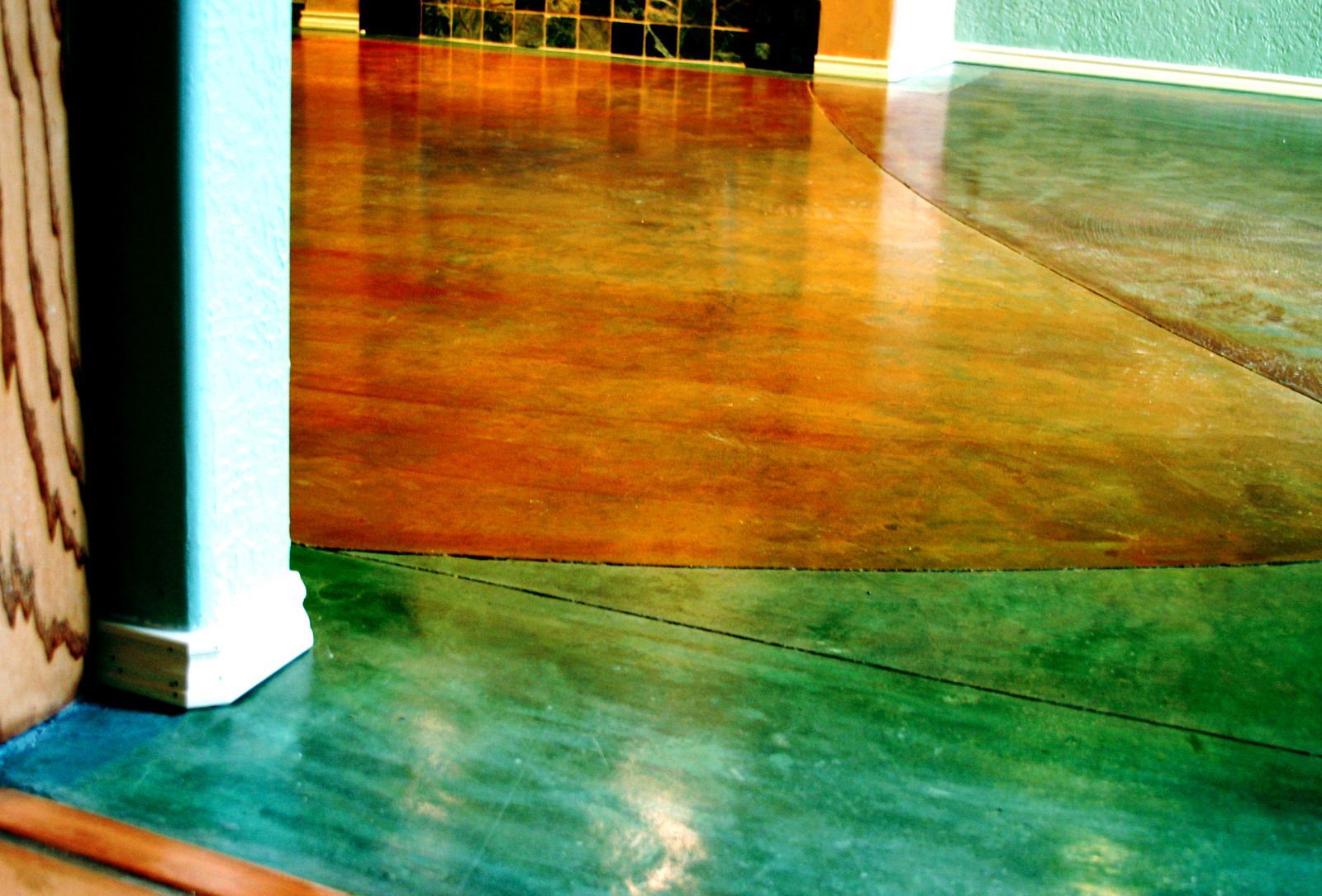
Your color range is set by the stain chemistry long before you reach for a swatch. Acid stain reacts with the lime and minerals already in your slab, which is why it produces those mottled, marbled earth tones. Think rust, amber, soft brown, and a weathered green. No two slabs react the same way, so you trade exact color matching for a one of a kind look.


Water based stain works differently. It carries pigment that bonds to the surface, so you get a wider and far more predictable palette, including grays, blues, charcoals, and softer neutrals. If you want a specific color to match cabinets or a feature wall, this is usually the safer path. We often steer homeowners toward water based stain for newer slabs in finished basements and toward acid stain for depth and movement in a living space or entryway.

Match the Color to the Light in the Room

The same stain can look like three different colors depending on the light hitting it, so judge every sample where the floor will actually live. A north facing basement in our area gets cool, blue leaning daylight for most of the day, which pushes grays and cool browns even cooler. A room with big west windows gets warm afternoon light that makes amber and rust tones glow. Warm LED bulbs do the same thing after dark.


Room size matters too. Lighter stains bounce light and make a tight basement or galley space feel bigger, while deep charcoals and dark browns feel rich but can shrink a small room. Look at what is already in the space. Pull an undertone from your trim, your cabinets, or a rug you plan to keep, then choose a stain that sits a shade or two away from it. Matching too closely flattens the room.

Choose the Sheen for How the Room Gets Used

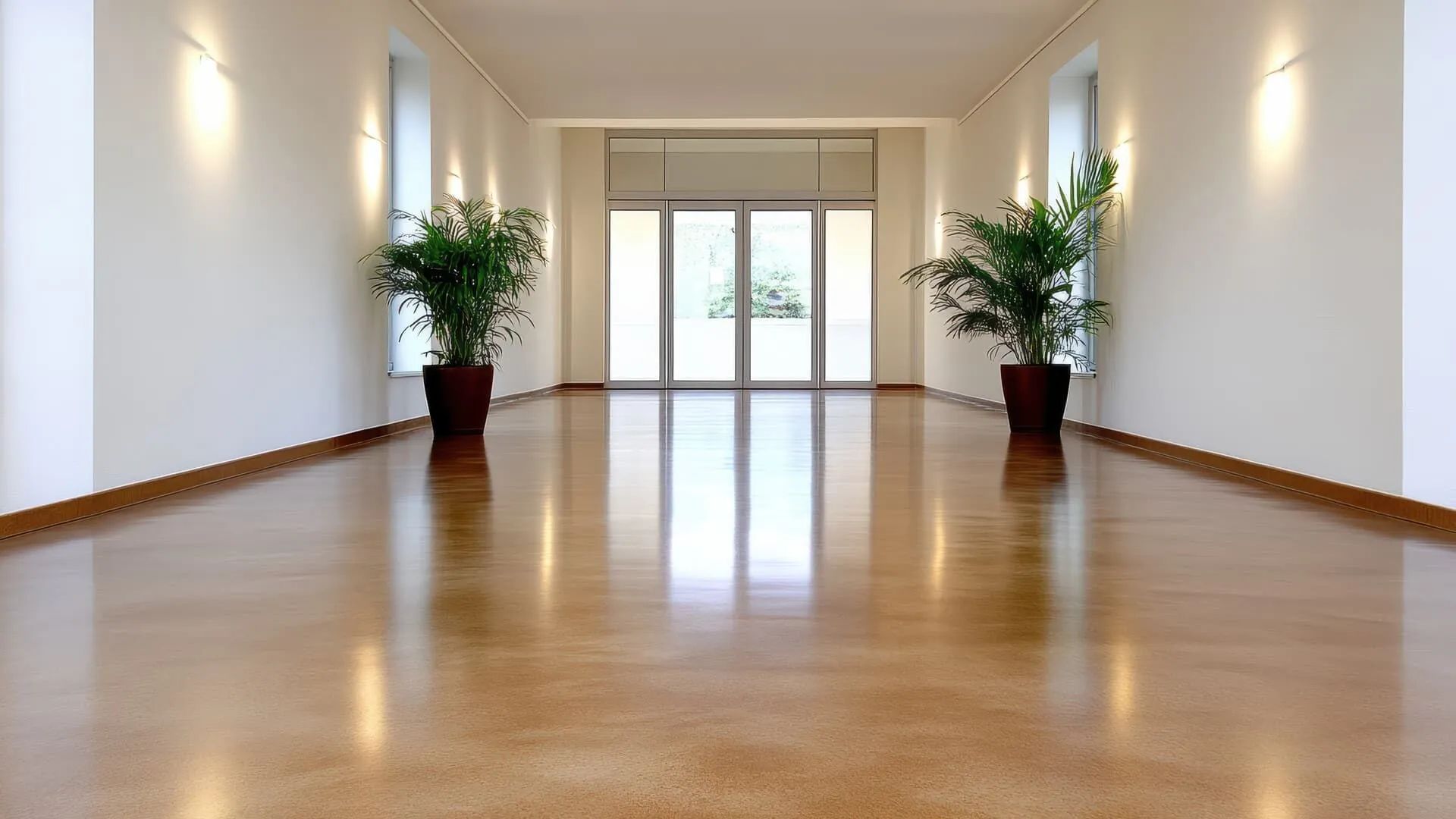
Sheen is a wear decision before it is a looks decision. The flatter you go, the more the floor hides dust, foot traffic, and minor scratches. The glossier you go, the more depth and shine you get, but the more you see every speck and the slicker the floor turns when water hits it.


For a basement playroom, laundry area, or any space that sees wet boots in winter, we lean toward a matte or satin finish with a slip resistant additive worked into the sealer. For a showpiece entry, a dining room, or a polished bar in a finished basement, a semi gloss or high gloss sealer makes acid stain colors look wet and deep. One honest trade off to know up front: high gloss needs more upkeep. It shows scuffs faster and usually wants a fresh coat sooner than a satin floor in the same spot.

How Our Winters Shape the Right Finish

Around here, the floor that looks perfect in July has to survive January, and that changes which finish actually makes sense. Road salt is the big one. Every winter, boots track a chloride slush across entry floors and garage slabs, and that salt is brutal on a thin sealer. A quality sealer with the right film build is what keeps the stain from clouding or whitening where the salt sits.


Freeze thaw swings matter for newer slabs too. Concrete that goes through repeated freezing and thawing moves more than people expect, and a sealer that flexes with it lasts far longer than a brittle one. Then there is basement humidity. Our river valley summers push damp into below grade slabs, so we test for moisture before we seal. Sealing a damp floor is one of the fastest ways to get a cloudy, peeling finish, no matter how good the stain underneath looks.

Test on Your Own Slab Before You Commit

Never pick your final color from a brochure or a photo of someone else's floor. The only sample that tells the truth is one applied to your own slab, because your concrete's age, mineral content, and any old patching all change how the stain takes. We put down test patches in a low traffic corner, seal a section of each, and let you look at them across a full day as the light changes.


Give it real conditions. Walk on it. Splash a little water to see how slick the sealed sample feels, and look at it under both your daylight and your evening bulbs. Spending a day on samples beats living with the wrong floor for the next decade.

The Mistakes That Lead to a Redo

The most common regret we see comes from chasing a trendy color without thinking about upkeep. A flat charcoal floor looks incredible in photos and shows every crumb and dust bunny in real life. People also rush the sealer, picking a high gloss because it looks dramatic in the showroom, then fighting scuffs in a busy hallway for years. And plenty of homeowners skip the moisture check on a basement slab to save a weekend, only to watch the finish cloud over by spring. None of these are dumb choices. Each one is a reasonable shortcut that just happens to backfire on a floor you will see every single day.

Frequently Asked Questions

  • How long does stained concrete last?

    A properly stained and sealed floor holds its color for many years before it dulls. The stain itself is permanent because it bonds right into the slab and becomes part of the concrete. What wears down is the sealer on top, so a fresh coat every few years keeps everything looking sharp, rich, and protected from daily foot traffic.

  • Can you stain concrete floors that are already old?

    Yes, and older slabs often take stain beautifully. Age, past sealers, glue, old paint, and stains all affect how the color reacts, so we grind and clean the surface first to give it a fair start. We always run a test patch on aged concrete before committing, since the result can surprise you, sometimes in the very best way.

  • Does stained concrete get slippery when wet?

    It can, especially with a glossy sealer in a spot that regularly sees water or winter slush tracked in. For entries, kitchens, laundry rooms, and basement areas, we mix a slip resistant additive into the sealer. Pair that with a satin sheen instead of high gloss, and your floor stays safe and steady underfoot through every single winter here.

  • What concrete stain color hides dirt best?

    Mid tone browns, warm grays, and mottled acid stain finishes hide dirt and foot traffic far better than solid charcoal or very light shades. The natural movement in a marbled finish breaks up dust, crumbs, and pet hair visually, so the floor reads clean longer. Flat black looks dramatic but shows every speck and crumb you happen to drop.

  • Is staining a basement floor a good idea in a damp climate?

    It works well as long as moisture gets handled first. We tape a plastic square to the slab overnight and check for condensation underneath before we ever seal a single section. If the slab reads damp, we address that first. Skip the step and even great stain clouds over and peels by the first warm spring here.

Experienced Hands Behind Every Stained Floor We Seal

The floor that lasts is the one where the color was chosen for your light and the finish was chosen for your wear, in that order. Around here, road salt and river valley moisture punish a careless sealer faster than a drier climate would, which is exactly why the finish decision matters as much as the shade. At Elite Concrete Floors, we have spent more than 21 years staining and sealing floors across Rochester, Pennsylvania, and the surrounding communities. Bring us your slab and your light, and we will help you land on a color and finish you will still love a decade from now.

Bright empty hallway with wooden floor, white walls, and potted plants near glass doors at the end.
May 18, 2026
Concrete is one of the most versatile building materials, providing strength, durability, and a long-lasting foundation for a variety of spaces. From residential garages to commercial warehouses, concrete surfaces are often the backbone of modern construction.
Floor buffer polishing a concrete floor, leaving a dusty white swirl.
April 25, 2026
Concrete flooring projects are a critical component of residential, commercial, and industrial construction. The durability, strength, and longevity of concrete make it a preferred choice for many flooring applications.
A worker in bright orange protective clothing spreads a liquid coating onto a warehouse floor with a roller tool.
March 19, 2026
Concrete flooring is a cornerstone of modern construction, prized for its durability, versatility, and low maintenance.
Bright empty hallway with wooden floor, white walls, and potted plants near glass doors at the end.
May 18, 2026
Concrete is one of the most versatile building materials, providing strength, durability, and a long-lasting foundation for a variety of spaces. From residential garages to commercial warehouses, concrete surfaces are often the backbone of modern construction.
Floor buffer polishing a concrete floor, leaving a dusty white swirl.
April 25, 2026
Concrete flooring projects are a critical component of residential, commercial, and industrial construction. The durability, strength, and longevity of concrete make it a preferred choice for many flooring applications.
A worker in bright orange protective clothing spreads a liquid coating onto a warehouse floor with a roller tool.
March 19, 2026
Concrete flooring is a cornerstone of modern construction, prized for its durability, versatility, and low maintenance.

Share this article